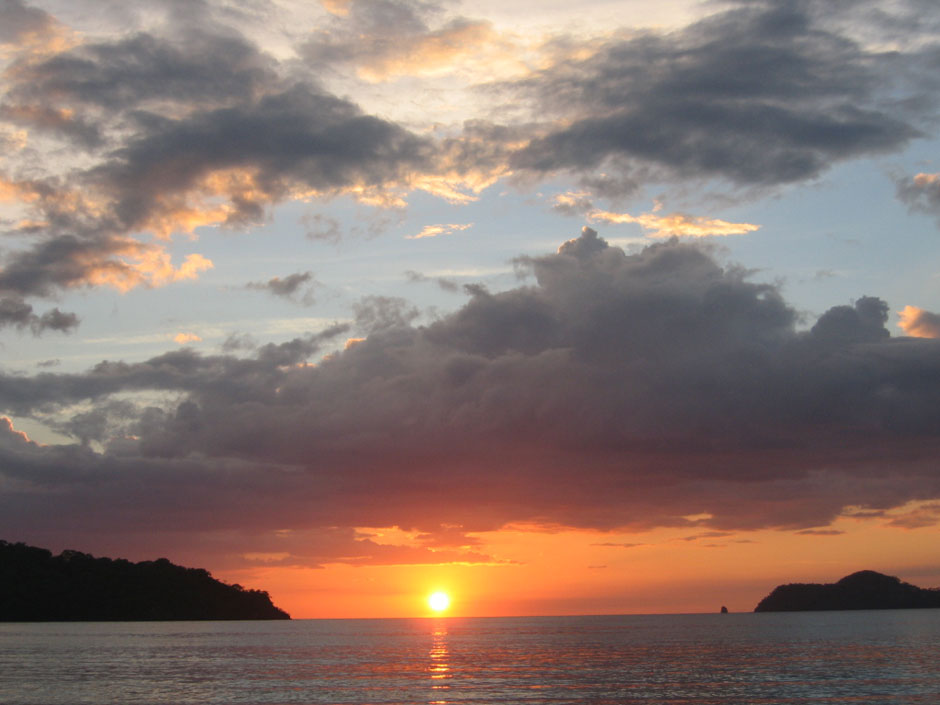
Papagayo Peninsula at a glance
- From Liberia airport (LIR)
- 30 minutes to an hour (25 to 45 km), depending on where you stay; smooth paved roads
- Swimming
- The calmest on the coast: the bay-side beaches are sheltered from wind and waves, with flat, clear water most of the time
- Best for
- Families with young kids, toddlers included; honeymooners and couples; anyone who wants the shortest ride after a long flight
- Facilities
- Resort facilities for guests. The public access to Playa Nacascolo has toilets, outdoor showers and a guard station, but no restaurants or shops
- Getting there
- The last stretch is the resorts' private, gated road. Private transfer from LIR
- Surf
- None to speak of. For a first surf lesson, Tamarindo is 1 hour 25 minutes to 1 hour 40 minutes away
What are the Papagayo Peninsula beaches like?
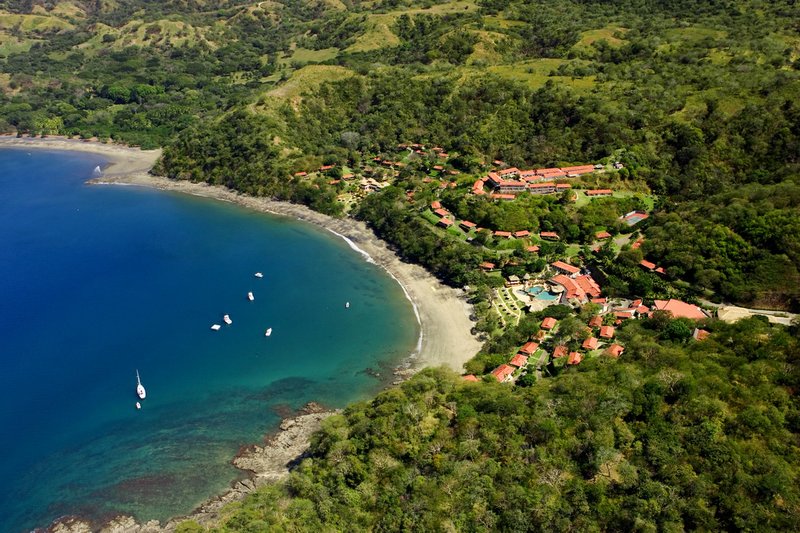
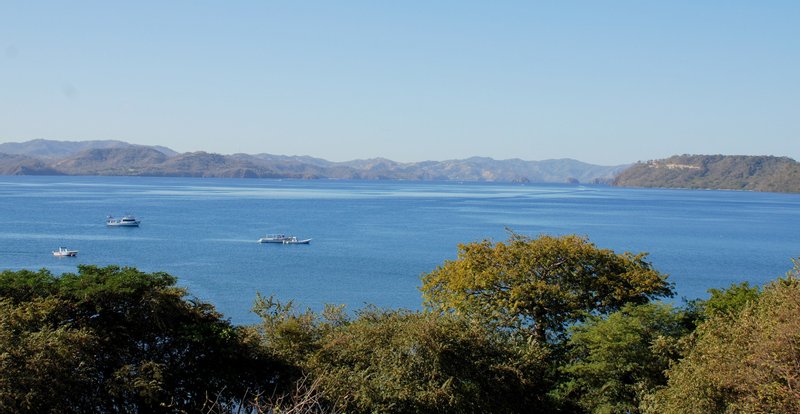
The Papagayo Peninsula is a hilly, dry-forest headland that wraps around Culebra Bay, a large, sheltered bay inside the Gulf of Papagayo. Almost the whole peninsula is a gated resort development, home to the Four Seasons, the Andaz, Marina Papagayo and a championship golf course. Its beaches are small coves with calm water, backed by forest rather than towns.
The beaches you'll hear about most:
- Playa Nacascolo: on the inland side of the peninsula, facing into Culebra Bay. It's sheltered from wind and waves, so the water is flat and clear most of the year. It's the one most day visitors go to.
- Playa Blanca and Playa Virador: two more coves on the peninsula, reached from the same public parking area as Nacascolo.
- Playa Prieta: another peninsula cove, also reached from the public parking area.
Across Culebra Bay, outside the gates, Playa Panamá is another very calm beach with plenty of shade and a couple of large beachfront resorts, and Playa Hermosa and Playas del Coco are just beyond it. Keep an eye out for wildlife on the peninsula: capuchin monkeys, coatis and iguanas in the trees, and eagle rays in the water.
Is it safe to swim on the Papagayo Peninsula?
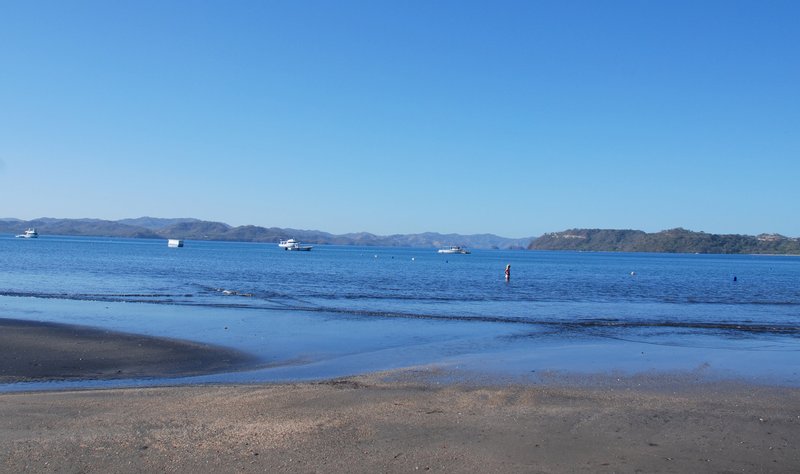
The bay-side beaches are the calmest in Guanacaste. Because they face into Culebra Bay rather than the open ocean, there's rarely any surf, and on a still day you can see the sandy bottom at waist depth. That makes them some of the best beaches in Costa Rica for toddlers and nervous swimmers.
- No lifeguards at the public beaches, so swim with someone and keep children close.
- Windy days: from about November to March the Papagayo winds can whip up the water on exposed stretches. The sheltered coves stay calmest.
- Bring water shoes if you want to explore the rocks at the ends of the coves, and take all your trash with you.
The calm, clear water is also good for snorkeling, kayaking and paddleboarding.
Insider tip: if you're not staying on the peninsula, go early and pack a picnic. There's nothing to buy at the public beaches, so stop at a supermarket in Liberia or Coco on the way, and bring more water than you think you'll need. The dry forest gets hot by midday.
Where to stay near the Papagayo Peninsula
- Honeymooners and couples: the resorts on the peninsula, for calm coves, space and the shortest possible ride from the airport.
- Families with young kids: a peninsula resort puts the calm water, pools and meals all in one place, which is hard to beat with toddlers.
- A more local, lower-key stay: Playa Panamá or Playa Hermosa, just across the bay, with calm water of their own.
- If you want a town: Playas del Coco, with restaurants, bars, supermarkets and dive shops.
See how the peninsula compares with the other bases in where to stay in Guanacaste.
Things to do and day trips from Papagayo
- From Marina Papagayo: sunset catamaran sails, snorkeling trips and sportfishing on the gulf.
- Diving from Playas del Coco: the Catalina Islands for manta rays (December to April) and the Bat Islands for bull sharks (May to November).
- Rincón de la Vieja, via Liberia: volcano trails, mud pots and the hot springs and mud baths, the classic volcano day from this side of the coast. See volcanoes and national parks.
- Playas del Coco: dinner out, shops and a livelier evening.
- Tamarindo (1 hour 25 minutes to 1 hour 40 minutes): a bigger beach town, and a first surf lesson if you'd like to try.
When is the best time to visit the Papagayo Peninsula?
December to April is the dry season: sunny and dry, but also the windiest time. The Papagayo winds blow from about November to March and peak in February, and the water can feel cooler. Christmas to New Year and Semana Santa (Easter week) are the busiest weeks. Humpback whales pass through from December to early April and from late July to November, and bottlenose dolphins live off Guanacaste all year.
May to November is the green season: the dry forest turns green, the wind drops, and rain usually comes in the afternoon. September and October are the wettest months. See the best time to visit Guanacaste.
Getting to the Papagayo Peninsula from Liberia airport
The peninsula is 25 to 45 km from Liberia airport, 30 minutes to an hour depending on where you're staying, on smooth paved roads. The last stretch is the resorts' private, gated road. It's the shortest beach transfer in Guanacaste, so even an evening landing gets you to the beach the same day. With a private transfer, your driver meets you at arrivals with a name sign, and up to an hour of stops is included. Driving yourself? Compare a rental car or private driver.
For every beach on this coast, by drive time from the airport, see our Guanacaste beaches guide.
Frequently asked questions
How far is the Four Seasons Papagayo from Liberia airport?
The Papagayo Peninsula resorts, including the Four Seasons and Andaz, are 25 to 45 km from Liberia airport, 30 minutes to an hour depending on where on the peninsula you're staying. The roads are smooth and paved, and the last stretch is the resorts' private, gated road.
How do I get from Liberia airport to the Papagayo Peninsula?
By road, 30 minutes to an hour. You can drive yourself, take a licensed airport taxi, or book a private transfer; with ours, your driver meets you at arrivals with a name sign and takes you straight to your hotel. See Liberia airport to the Papagayo Peninsula.
Are the Papagayo Peninsula beaches public?
Yes. Every beach in Costa Rica is public, including the ones in front of the Papagayo resorts. The peninsula road is private and gated, but there's a public parking area near the end of the public road, with a shuttle and a short boardwalk down to Playa Nacascolo; Playa Blanca, Playa Virador and Playa Prieta are reached from the same area. Bring food and water: there are no restaurants at the public access.
Is the water calm on the Papagayo Peninsula?
Yes, on the bay side it's the calmest water in Guanacaste. Beaches such as Playa Nacascolo face into Culebra Bay, away from the open Pacific, so the water is usually flat and clear enough to see the sandy bottom at waist depth. There are no lifeguards at the public beaches, so still keep an eye on children.
Is the Papagayo Peninsula good for families?
Yes. It's the shortest transfer from the airport, the water on the bay-side beaches is calm and shallow, and the resorts have everything on site. For a more local, lower-key stay nearby, look at Playa Panamá, Playa Hermosa or Playas del Coco across the bay.
Is it windy on the Papagayo Peninsula?
From about November to March, yes, at times. The Papagayo winds blow across northern Guanacaste in the dry season and peak in February. They also pull cooler water up from the deep, so the sea can feel cooler than you'd expect. The sheltered bay-side beaches are the best places to be on a windy day.